
Benazir Income Support Programme (BISP) – Eligibility, Payments, Benefits & Registration Guide
Benazir Income Support Programme (BISP): Complete Guide, Benefits, Eligibility & FAQs (2026)
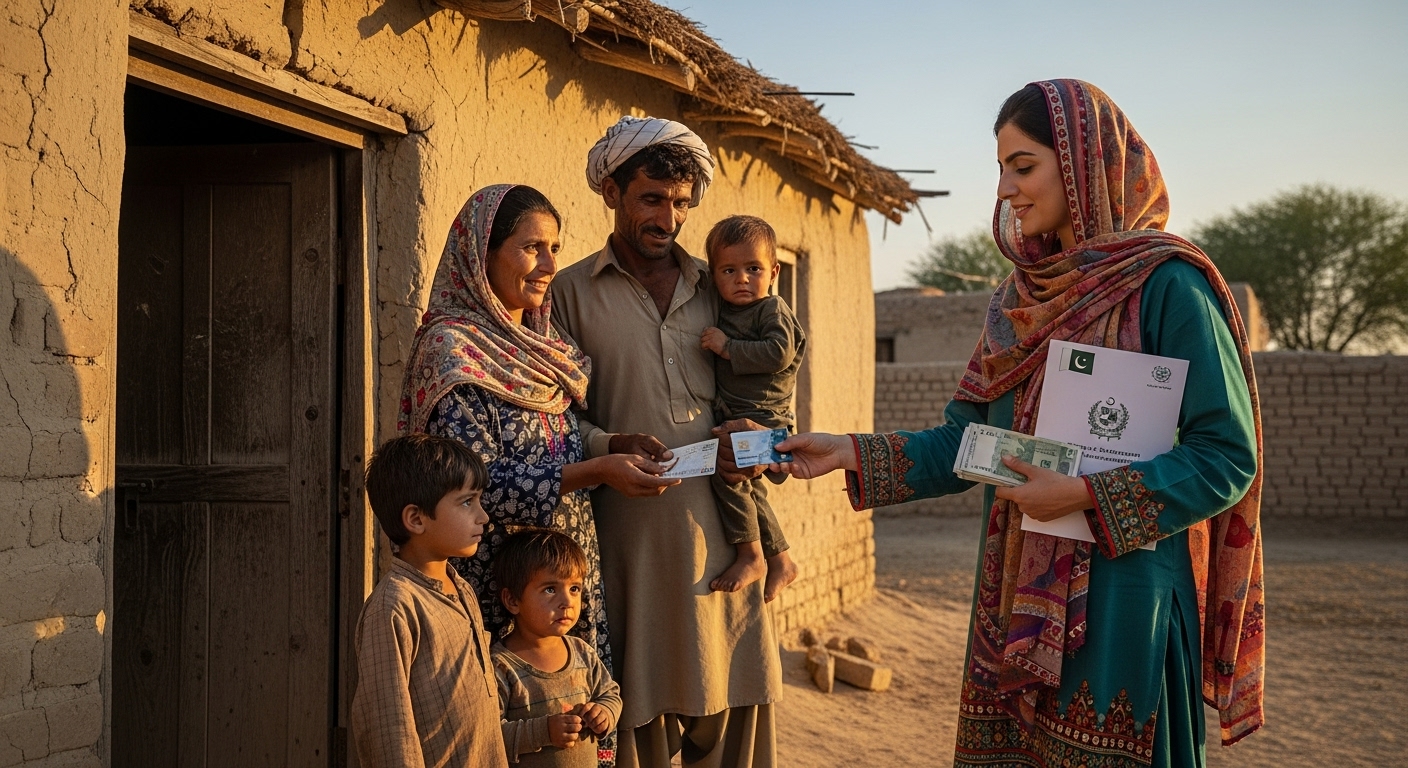
The Benazir Income Support Programme (BISP) is Pakistan’s largest social safety net designed to provide financial assistance to low-income families. Launched in July 2008, the program aims to reduce poverty, support vulnerable households, and empower women through direct cash transfers.
Named after former Prime Minister Benazir Bhutto, the initiative was created during a period of rising food prices and economic challenges to protect struggling families from financial shocks.
What is the Benazir Income Support Programme?
BISP is a federal unconditional cash transfer program focused on improving the financial capacity of poor households and ensuring equitable wealth distribution.
The program primarily delivers payments through women, promoting financial independence and social empowerment while ensuring funds benefit entire families.
Today, it operates nationwide with regional, divisional, and tehsil offices and maintains one of Pakistan’s largest poverty databases created through door-to-door surveys.
👉 Recent updates show the program supports around 10 million families, making it one of South Asia’s largest welfare initiatives.
Key Objectives of BISP
The government designed BISP with both short-term relief and long-term development goals:
Enhance financial capacity of poor families.
Implement targeted policies for vulnerable populations.
Reduce poverty and promote fair wealth distribution.
Additionally, the program aligns with global development goals aimed at eradicating extreme poverty and empowering women.
Latest Payment Amount (2025–2026)
BISP provides quarterly financial assistance to eligible households to help cover essentials like food, healthcare, and education.
Rs. 13,500 per quarter was the standard payment in 2025.
Payments are expected to increase to about Rs. 14,500 quarterly in 2026 to address inflation.
Funds are distributed via banks, mobile wallets, and digital payment systems to ensure secure transfers.
Who is Eligible for BISP?
Eligibility is determined through socioeconomic surveys and strict screening. Common criteria include:
✅ Monthly household income below about Rs. 50,000
✅ Poverty score below the official threshold
✅ Priority for widows, disabled individuals, and vulnerable women
❌ Government employees, taxpayers, or people owning significant assets are generally excluded.
This structured process helps ensure assistance reaches the most deserving households.
How to Register for the Benazir Income Support Programme
Although procedures may evolve, the typical process includes:
Complete the National Socio-Economic Registry survey.
Provide a valid national identity document.
Undergo verification.
Receive confirmation and payment details via official channels.
Biometric verification and NADRA integration have improved transparency and reduced fraud risks.
Impact of BISP on Poverty Reduction
BISP has evolved from a simple cash transfer initiative into a nationwide welfare system providing direct economic relief to millions battling rising living costs.
The program helps families:
Manage daily household expenses
Prevent school dropouts
Improve food security
Maintain basic living standards during economic instability
Challenges and Transparency Efforts
Like many large welfare programs, BISP has faced scrutiny. A government audit once reported misuse of funds by officials, raising concerns about oversight and accountability.
However, ongoing digitization, biometric checks, and secure payment methods are being implemented to strengthen transparency and service delivery.
FAQs About Benazir Income Support Programme
✅ What is the purpose of BISP?
The program aims to reduce poverty by providing direct financial assistance to low-income families and empowering women economically.
✅ When was BISP launched?
It was launched in July 2008 by the Government of Pakistan.
✅ How much money do beneficiaries receive?
Most beneficiaries receive quarterly payments starting from Rs. 13,500, with increases planned to offset inflation.
✅ Who gets priority?
Women from the poorest households, including widows and disabled individuals, are prioritized.
✅ How many families benefit from BISP?
The program currently supports roughly 10 million families nationwide.
Conclusion
The Benazir Income Support Programme remains a cornerstone of Pakistan’s poverty-reduction strategy. By offering direct financial aid, prioritizing women, and expanding digital systems, it continues to strengthen the country’s social protection framework.
As economic challenges persist, BISP plays a crucial role in helping vulnerable families achieve stability and build a more secure future.